Painting a room properly is mostly preparation and order of work. Two coats applied in the right sequence will look better than three coats rushed into a dusty room. A weekend is enough for a standard bedroom or living room if you start early and let each stage dry.
Clear and protect
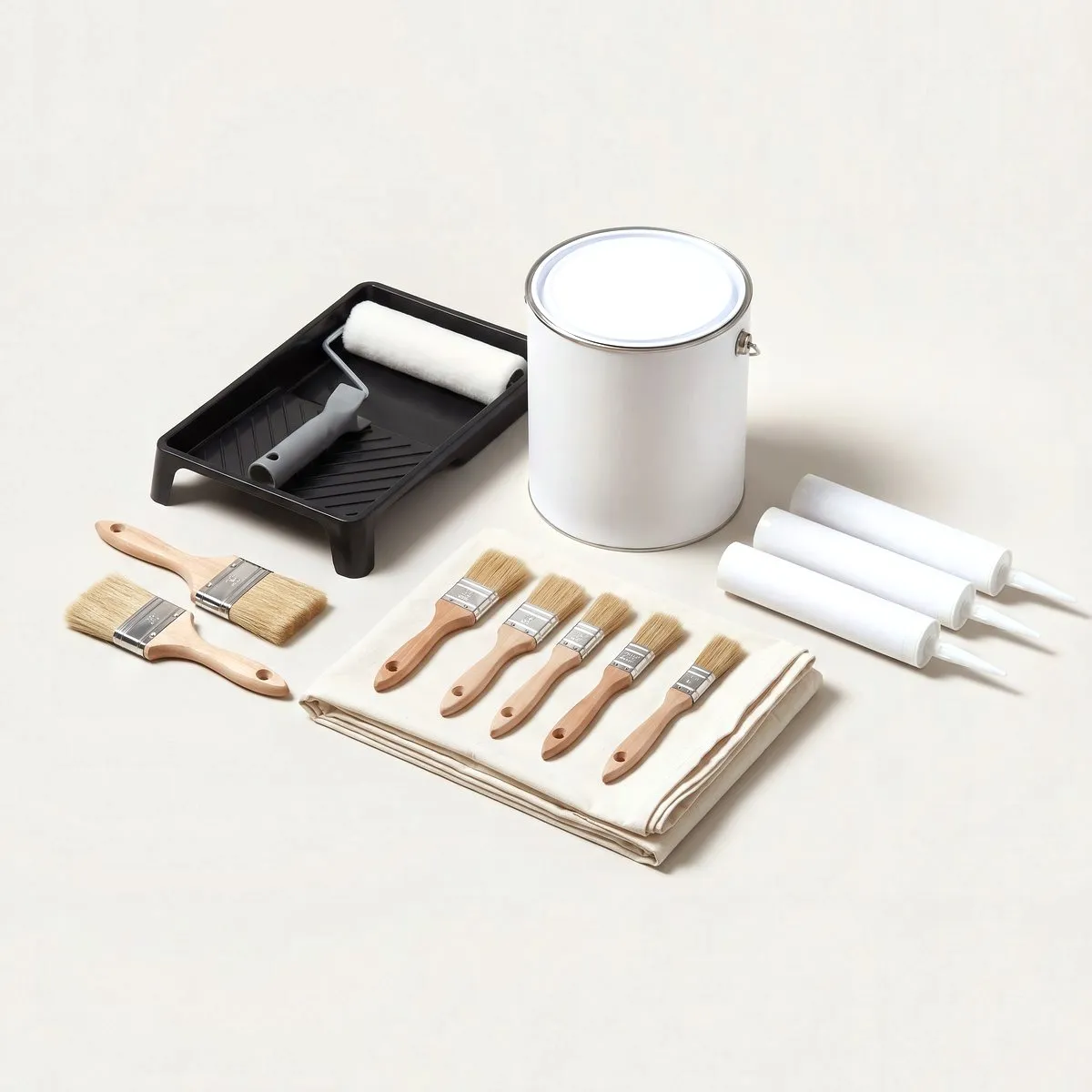
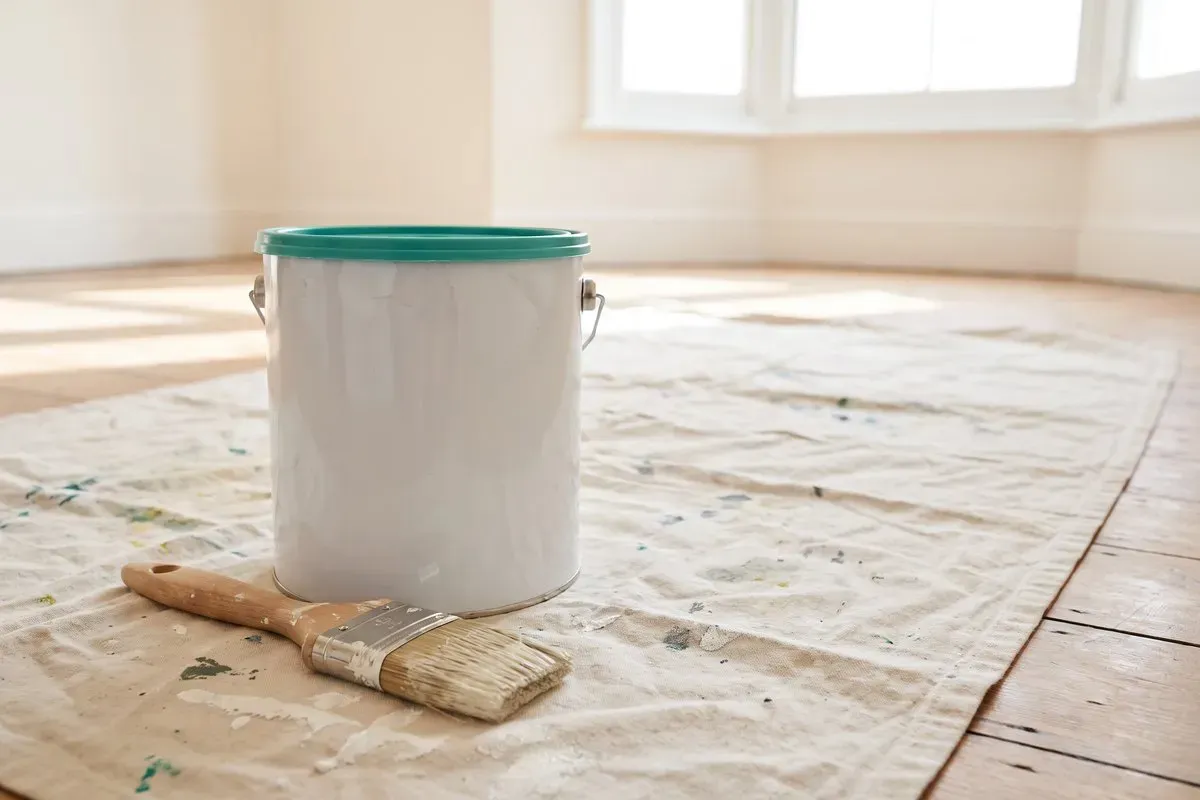
Move what you can out of the room and push the rest to the middle. Cover the floor with the Ashcombe Cotton Twill Dust Sheet, 12 x 9ft, and tape it down at the edges so it does not move underfoot. Remove sockets and light switches, or tape around them. Fill cracks and gaps with Ashcombe Decorators Caulk, 3 pack, then sand the filler smooth once it is dry. Wipe the walls with a damp cloth and let them dry completely.
Tools and paint
For walls and ceilings, the Ashcombe 9in Roller and Tray Kit covers a normal room quickly. Use the Ashcombe Synthetic Brush Set, 5 piece, for cutting in at the ceiling line, corners and skirting. Ashcombe Trade Matt Emulsion, 5L, covers up to 14 square metres per litre, so one tin is usually enough for a small room in two coats. Check the tin for the exact recoat time and follow it. Stir the paint thoroughly before you start, and pour what you need into a scuttle rather than working from the tin.
Work in the right order
Paint the ceiling first, then the walls, then the woodwork. Cut in the edges with a brush before you roll, working in sections about a metre wide so the wet edge stays alive. Roll in a W pattern to spread the paint, then finish with straight strokes in one direction. Apply two thin coats rather than one thick coat. For skirting, doors and trim, Ashcombe Satinwood, 2.5L, gives a wipeable finish and is available in Brilliant White and Off White.
Remove the tape while the paint is still slightly soft, pulling it away at a low angle. Put the fittings back once the walls are dry. Keep a small brush and a damp cloth with you for the odd run or speck of dust. Keep the room ventilated, and do not rush the final coat because a cool room slows drying.
Paint the woodwork after the walls so that any drips land on a surface you can wipe. A damp cloth lifted early is easier than a dried drip sanded later.
Weekend checklist
- Clear the room and cover the floor.
- Fill cracks, sand them back and wipe the dust away.
- Stir the paint and check the recoat time on the tin.
- Cut in the edges before you roll each section.
- Apply two thin coats, keeping a wet edge.
- Paint the woodwork after the walls are dry.
- Remove tape before the paint fully hardens.
Tinted or opened paint cannot be returned unless it is faulty, so buy the quantity you need and keep a little for touch-ups. Wear eye protection when sanding overhead, and keep the room ventilated throughout.