Falls from height are still the most common serious accident on small building jobs, and most of them involve a ladder that moved, slipped or was used for the wrong job. A few minutes of checking before you climb is time well spent. The rules are simple and they do not change because the job is quick.
Choose the right ladder
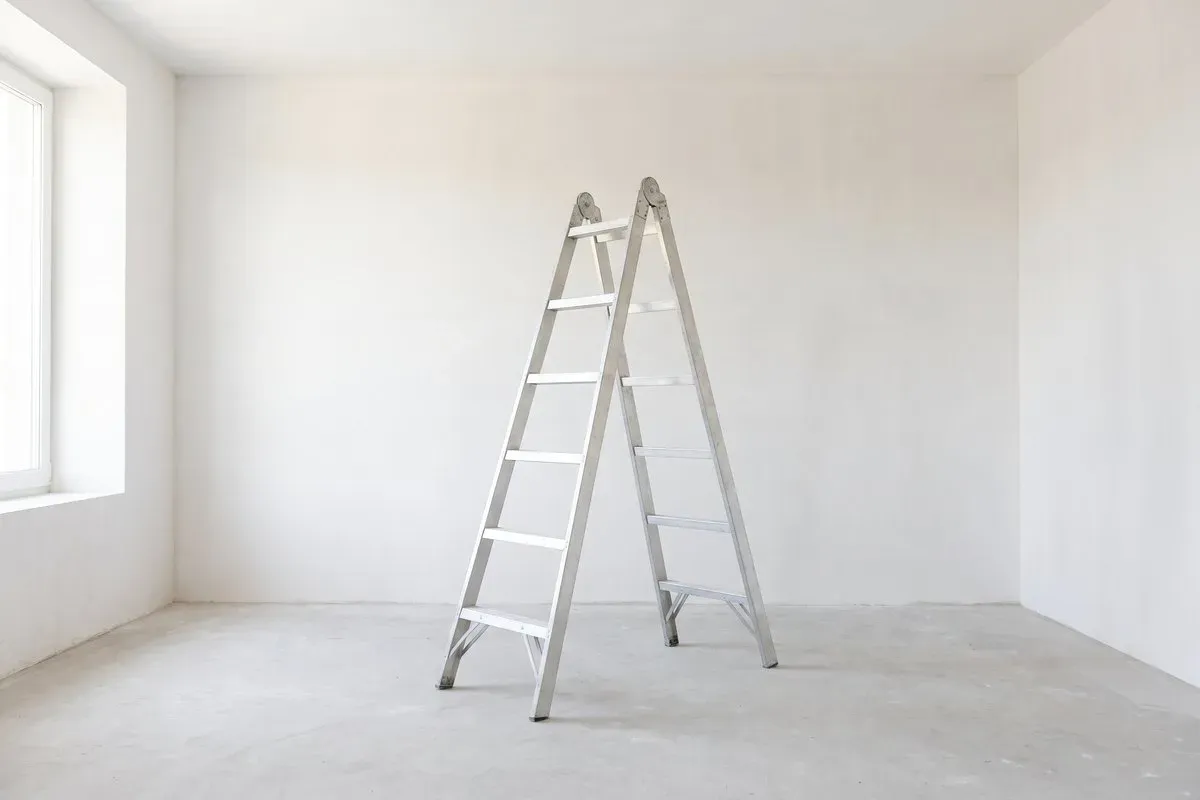
Use a step ladder for work directly below you, and a leaning ladder only for access or short work where you can keep your body between the stiles. The Brackley Aluminium Step Ladder comes in 3, 5 and 7 treads, which covers most indoor decorating and maintenance. The Brackley 4-Way Combination Ladder covers stairwells and awkward spaces. The Brackley Two-Section Extension Ladder comes in 3.5m and 4.5m lengths for outside work. Every ladder in the range is built to EN 131 Professional and rated to 150kg, but the rating only helps if the ladder is set correctly.
Set it up properly
Put the ladder on firm, level ground. Clear the area around the base and check that the feet are not worn. A leaning ladder should sit at roughly one unit out for every four units up, which is about 75 degrees. Secure the top where you can, or have someone foot the ladder. Keep the base away from doors, and never place a ladder in front of a door that can open towards it. Lock the spreader bars on a step ladder before you climb.
Climb and work safely
Keep three points of contact: two feet and one hand, or two hands and one foot. Face the ladder and keep your body between the stiles. Do not overreach. Move the ladder rather than stretching sideways, and keep your belt buckle inside the stiles. Only take up the tools you need, and use a bag or a holster rather than carrying items in your hands. Do not stand on the top two treads of a step ladder or the top three rungs of a leaning ladder, and never work from the very top.
Check the ladder before every use. Look for bent stiles, cracked treads, loose rivets and damaged feet. Store it flat and dry, and do not paint or cover the labels. If a ladder has been dropped or has taken a heavy impact, take it out of service until it has been checked.
Keep the ladder clear of overhead power lines outside, and never use a metal ladder near live electrical equipment. For long work at height, a work platform gives you a stable surface and both hands free.
Checklist before you climb
- Check the ladder is rated EN 131 and undamaged.
- Set it on firm, level ground with the feet sound.
- Lock the spreader bars or secure the top.
- Keep the ladder at the correct angle.
- Keep three points of contact at all times.
- Keep your body between the stiles and do not overreach.
- Move the ladder rather than stretching sideways.
Keep the area below clear, and never climb with something in both hands. If the job needs both hands for long periods, use a work platform instead. A ladder is an access tool, not a workbench.