Every fixing fails for the same reason: it was chosen for the wrong wall. A plug that grips plasterboard will pull straight out of brick, and a masonry plug in a hollow wall has nothing to bite on. Match the fixing to the material, then match the screw to the plug.
Solid masonry
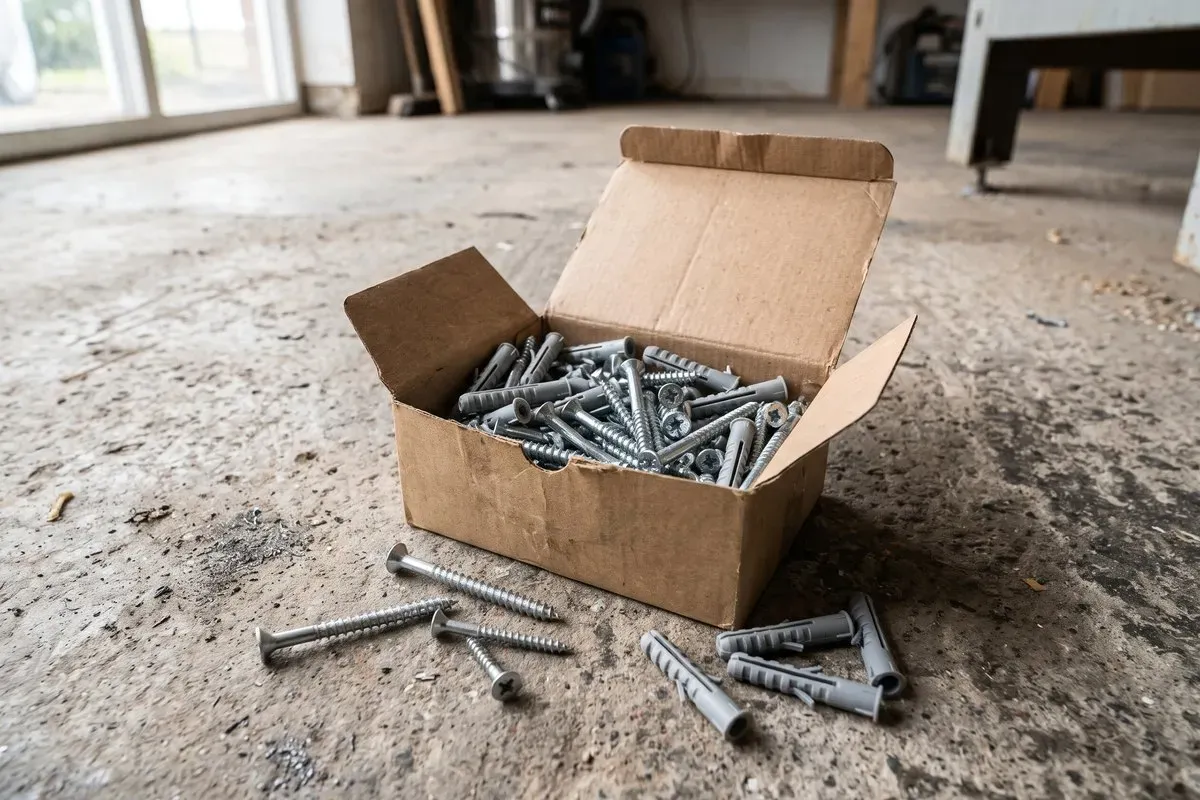
Brick, block and stone take a conventional wall plug and screw. Drill the hole to the plug's stated diameter, keep the drill level and clear the dust before you insert the plug. Fixline Wall Plugs, 500 pack, cover the common sizes for shelves, cupboards and battens. Use the Fixline Masonry Drill Bit Set, 5 piece, so the hole matches the plug rather than the nearest bit in the box. A screw should pass through the bracket and bite into most of the plug, with a few millimetres to spare.
Plasterboard and hollow walls
Plasterboard alone holds very little. A plain plug will work for a light picture hook, but shelves and televisions need a proper plasterboard fixing that spreads the load behind the board. Fixline Plasterboard Fixings, 100 pack, are the right starting point for a hollow wall. Find the studs first if you can, because a fixing into timber is stronger than a fixing into board. Tap along the wall or use a detector, and mark the stud centres before you drill.
Timber, frames and heavy loads
Into a stud, a wood screw alone is often enough if the screw is long enough to reach the timber. Fixline Wood Screw Box, 1,200 piece, gives you a range of lengths for brackets, battens and cabinets. For door frames, window frames and heavy cupboards on masonry, a frame fixing passes through the item and anchors into the wall. Fixline Frame Fixings come in 8 x 100mm and 10 x 120mm, and the larger size suits heavier loads. Pilot drill timber to stop it splitting, especially near an edge.
Check for pipes and cables. A cable detector is cheap compared with repairing a chased cable, and sockets, switches and radiators give you clues about where services run. Isolate the power if you are working close to electrics. Wear eye protection and a dust mask, and keep dust out of the room with a vacuum or a sheet.
Choose the shortest fixing that does the job. A longer screw in a shallow plug adds nothing, and an oversized hole weakens the wall. Test the fixing with a firm pull before you hang anything valuable.
Weather matters outside. Stainless screws resist rust better than bright zinc plated ones, and any fixing that holds a gate or a fence post takes far more load than a shelf bracket. When in doubt, go up a size in both plug and screw rather than adding more small fixings.
Checklist
- Identify the wall material before choosing a fixing.
- Check for pipes and cables with a detector.
- Drill the exact diameter stated on the plug or fixing.
- Clear dust from the hole before inserting the plug.
- Use a screw long enough to reach the anchor point.
- Pilot drill timber near edges to avoid splitting.
- Test the fixing with a firm pull before loading it.